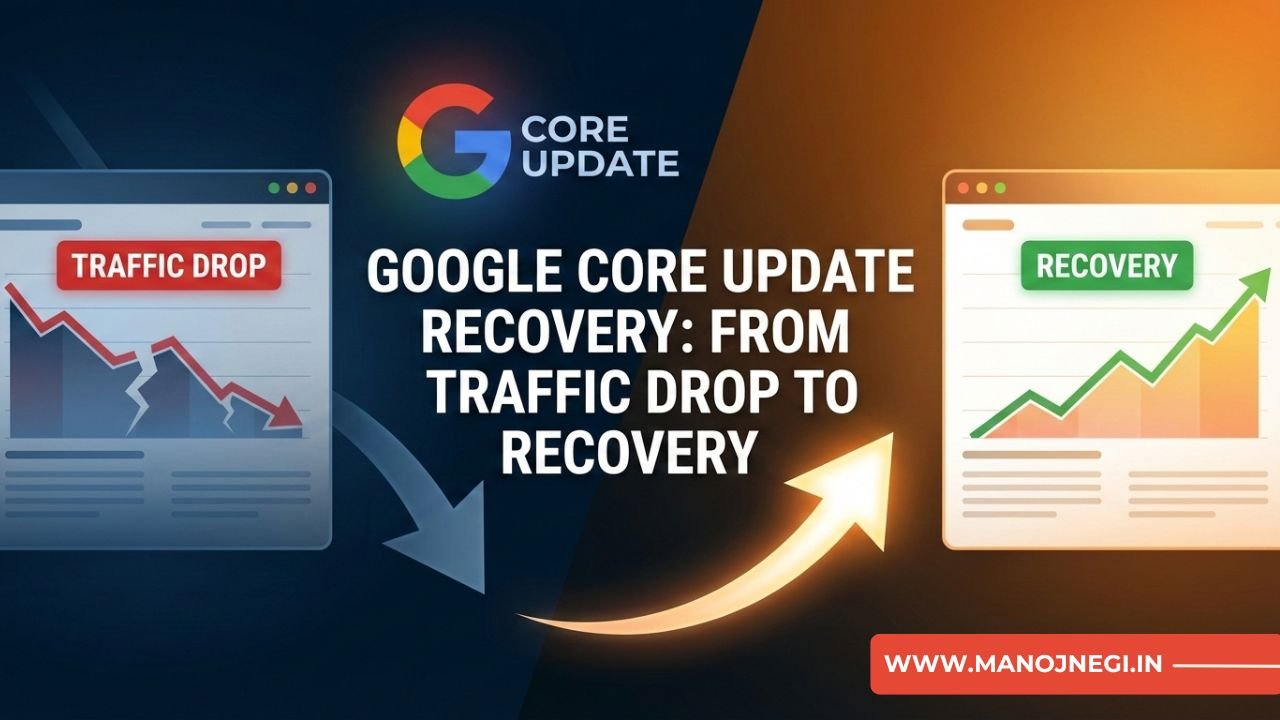
Google Core Updates can feel like an earthquake for your website. One day your traffic is stable, and the next, rankings drop, leads slow down, and revenue takes a hit.
If you’ve recently experienced a sudden traffic decline, you’re not alone. Core updates are designed to improve search quality—but they can significantly impact websites that don’t align with Google’s evolving standards.
The good news? Recovery is possible. With the right strategy, patience, and a structured SEO plan, you can regain lost visibility and even outperform competitors.
Understanding Google Core Updates
Google releases core updates several times a year to improve how its algorithm evaluates content. These updates focus on ranking signals such as:
- Content quality and relevance
- Expertise, Experience, Authoritativeness, and Trustworthiness (E-E-A-T)
- User experience signals
- Content depth and originality
- Technical SEO health
Unlike manual penalties, core updates don’t target specific websites for wrongdoing. Instead, they reassess how content compares to competitors across the web. If your rankings drop, it often means other pages now provide more value in Google’s evaluation.
Why Traffic Drops After a Core Update
Traffic loss can happen for several reasons. Understanding the root cause is the first step toward recovery.
1. Thin or Outdated Content
Pages that lack depth, updated data, or comprehensive information often lose rankings.
2. Weak E-E-A-T Signals
Google increasingly prioritizes real expertise and trust signals. Missing author profiles, poor credibility indicators, or generic content can hurt rankings.
3. Poor Content Intent Match
If your content no longer matches search intent, Google may replace it with more relevant results.
4. Technical SEO Issues
Slow load times, mobile usability problems, indexing errors, and crawl inefficiencies can amplify ranking drops.
5. Increased Competition
Sometimes, competitors simply improved their content strategy.
Google Core Update Hit Your Site? 7 Proven Recovery Steps
Step 1 – Stay Calm and Confirm the Update
Now, before you start acting, just confirm that Google has a new core update and it is completed. You can confirm this on the official platforms of Google on social media and the web, as Google maintains a public list of all its updates.
Do not act in haste, as the maximum number of websites see fluctuations in rankings and traffic during and after the update for a certain time. Some websites recover partially or fully once things settle.
Step 2 – Measure the Damage and Identify Why
Check Overall Traffic and Engagement
If your site traffic and ranking are on the lower side even after things become steady, check and compare the matrices before and after the update. Note down certain parameters like organic sessions, bounce rate, pages per session, and average session duration. This will confirm whether the drop is huge or limited to certain pages only.
Analyze Organic Search Performance
Make a report of queries, pages, and positions for the last 3-6 months. Identify the keywords and URLs that have been affected the most after the update.
Identify the Most Affected Pages
Create a simple list of URLs with the highest traffic and/or ranking drops. Also, mention the intent of every page, like informational, transactional, YMYL, etc. This will help you prioritize the pages you need to work on for recovery.
Step 3 – Audit Content Quality, Relevance, and E-E-A-T
Compare with Pages that Outrank You
Now, search your main keywords in the private or incognito mode and assess the top 5-8 results. See the quality, structure, and depth of the content.
Now, ask yourself whether the content on those websites is user-friendly, complete, and updated than yours?
Remember, recovery often starts by identifying the areas where your competitors are outperforming you.
Review for Depth and Helpfulness
From the list, review each page and assess whether it completely answers the search query and sub-queries a user must have.
See if the content is up to date and has relevant examples, depending on your niche.
Remember, pages having thin and AI-sounding content are the frequent losers, especially during core updates.
Strengthen E-E-A-T Signals
Review and optimize content in all your underperforming pages according to E-E-A-T guidelines. Wherever possible, show real user experience and evidence, including original photos, case studies, data, and client results. These insights tend to outperform generic information.
Step 4 – Refresh and Re-Optimize Existing Content
Recovery doesn’t only come from deleting everything and starting new. It is usually a result of strategic updates to your best assets.
Prioritize High-Value, Dropped Pages
Start with the pages that ranked previously and had the maximum traffic before the update. Such pages require subtle changes to rank again.
Update and Improve the Page
Add missing information, like headings, FAQs, or examples, to the pages you have identified and prioritized one by one. Remove old, outdated information if there as such information is often flagged after core updates from Google.
Improve the formatting of your content and add tables, wherever feasible, to make it user-friendly and mobile-friendly.
Re-Align with Search Intent
Realign your content with the search intent of the user, like a buying guide, comparison, or checklist.
If you have an e-commerce website, give honest pros and cons, alternatives, and clear CTAs rather than over-hyped sales copy.
Step 5: Fix Technical and UX Issues That Hold You Back
While core updates focus heavily on quality, technical and UX problems can drag down even great content.
Run a technical SEO audit
Check for slow page loading, poor Core Web Vitals (LCP, INP, CLS), broken links, and redirect chains; these hurt user experience and can limit your recovery.
Ensure clean sitemaps, correct robots.txt rules, HTTPS, and no accidental no-index tags on key pages, especially if some URLs got de-indexed around the update.
Improve site structure and internal links
Simplify navigation so users and crawlers can reach key sections in a few clicks; important pages should not be buried too deep.
Strengthen internal linking to your most valuable pages from related articles, using descriptive anchor text to clarify relevance and spread authority.
Enhance user experience signals
Reduce intrusive popups and aggressive ads, especially on mobile, which recent updates have targeted more aggressively.
Improve readability by changing font size, spacing, contrast, and clear CTAs so users can quickly find what they came for and stay longer.
Step 6: Rebuild Authority with Better Links and Mentions
Core updates often reshuffle who Google trusts most in a niche, so authority matters more than ever.
Focus on earning links from relevant, reputable sites in your industry—through guest content, partnerships, PR, or original research worth citing.
Avoid spammy link schemes or bulk low-quality links; recent core updates and spam updates hit manipulative patterns and low-value networks harder than before.
Brand mentions without links, positive reviews, and strong social visibility can also help reinforce your site as a known, trusted entity over time.
Step 7: Publish New, High-Quality Content Strategically
Recovery isn’t only about fixing the past; it is also about building a better future content footprint. Create new content that fills clear topical gaps: questions your audience asks that competitors now answer better than you do.
Aim for depth, originality, and clear value. Thin, lightly rewritten, or mass-produced AI content is a common loser in recent core updates, especially on affiliate and YMYL sites.
Cluster content around core topics—pillar pages plus supporting posts—so Google can see strong topical authority instead of scattered, unrelated pieces.
Common Mistakes to Avoid
During recovery, many website owners make critical errors:
- Making too many changes at once
- Over-optimizing keywords
- Removing large sections of content without analysis
- Ignoring technical SEO
- Chasing short-term ranking hacks
Consistency and strategic improvements outperform reactive decisions.
When to Work With an Expert
If traffic loss significantly impacts your business, working with a search engine optimization specialist can accelerate recovery. An experienced professional can:
- Conduct a detailed algorithm impact audit
- Identify content gaps
- Improve technical SEO performance
- Rebuild authority and trust signals
- Develop a long-term sustainable ranking strategy
Professional guidance often reduces recovery time and prevents future losses.
How Long Does Recovery Take?
Many documented recoveries from core updates take 3–6 months, often aligning with the next core update or significant quality re-evaluation.
For heavily affected sites (e.g., thin affiliates, outdated archives, or weak E-E-A-T), realistic timelines can stretch to 6–12 months, especially in sensitive niches.
The key is consistency: ongoing content improvements, technical maintenance, and authority building gradually rebuild trust in your site.