In this ever-evolving digital marketing world, the sources from which you get online traffic also keep evolving. Now, to stay ahead of the competition, you should not only know “what drives traffic,” but also “how and why.” For more than a decade, traditional SEO has delivered strong results for businesses seeking to strengthen their online presence. And why not? SEO experts have mastered it.
But now, a new player, or we must say a traffic source, has emerged, i.e., “Google Discover.” It is creating fresh opportunities for generating traffic and engagement.
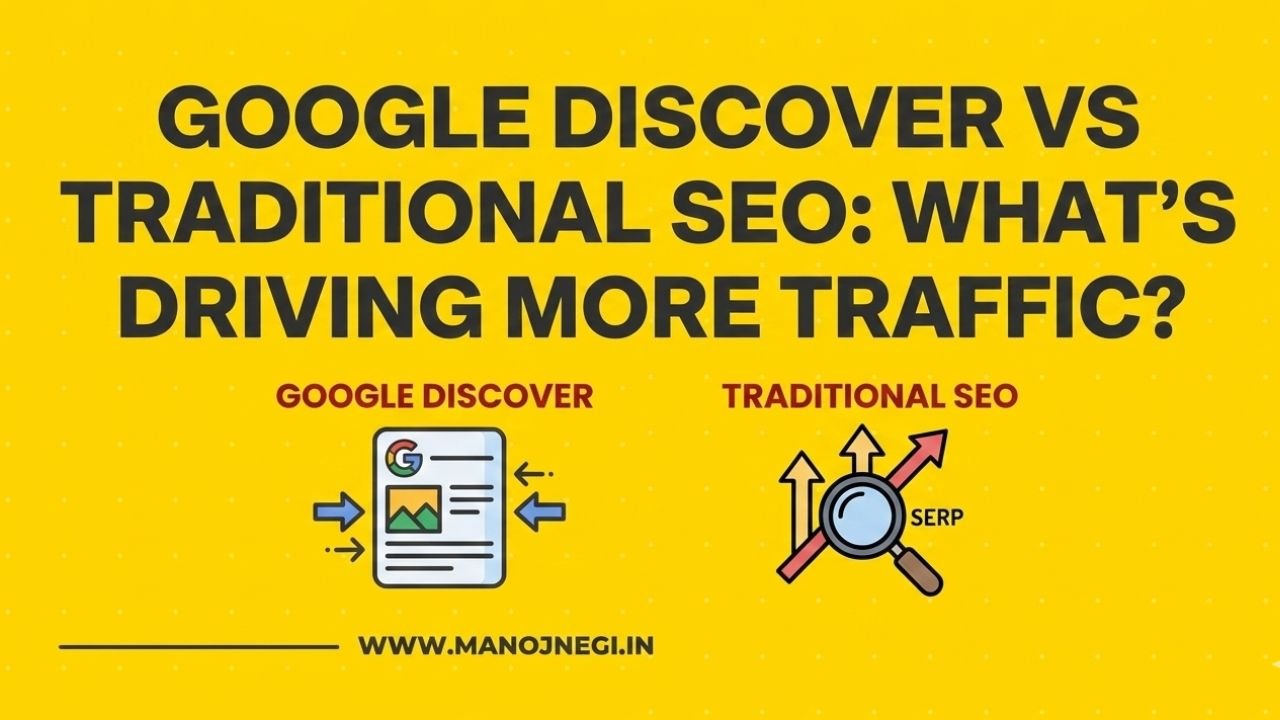
In this post, we will have a quick look at how Google Discover is different from traditional SEO and which drives more traffic.
What is Google Discover?
Sometimes known as “Google Feed,” Google Discover is a recommendation feature that suggests content based on users’ search history and behavior. The best part about this feature is that users don’t have to type any query to get personalized recommendations, unlike traditional search. The Google Discover feature appears on mobile devices in the Google App or on the Google Homepage.
Now, you might be wondering how it does that? It uses machine learning to analyze users’ search history and behavior to deliver personalized content in the form of blogs, articles, videos, and visuals.
We must say that Google Discover is suggestive by nature. It assesses:
- Topics users have shown interest in
- Sites they frequently visit
- Related content patterns and browsing history
Google Discover is proactive when it comes to suggesting content. This brings visibility to the sites or posts that users might not have even thought to search for.
What is Traditional SEO?
We have been practicing traditional SEO for years now. This is a method to improve visibility in the search engine result pages (SERPs) and bring more traffic. Through traditional SEO, websites rank for the specific search queries made by users. This process involves:
Keyword research and optimization — understanding what your audience is searching for and aligning your content with those terms.
On-page SEO — optimizing content structure, headers, meta descriptions, titles, URLs, and images.
Technical SEO — improving site speed, mobile responsiveness, indexing, and structured data.
Link building — earning high-quality backlinks from relevant and authoritative sources.
Content strategy — creating evergreen, relevant, and helpful content that answers user intent.
Intent and relevance are the key to success for traditional SEO.
Google Discover Vs Traditional SEO – Key Differences
Having a good understanding of how these two traffic sources work helps marketers, bloggers, and businesses decide which way to go or try both.
Intent – Active Vs Passive
Google Discover – It works passively, meaning users don’t search for the content; it is suggested to them.
Traditional SEO – Here, users ask queries, and content matching their intent and relevance appears at the top in the SERPs.
Here, the way content appears in front of users is changed significantly. With traditional SEO, the results are shown specifically to the query made; however, Google Discover tries to capture users’ interest to recommend content even when they think of searching for it.
Content Lifespan
Google Discover – Here, content often sees spikes in engagement for a short time and fades quickly. This is because the feed at Google Discover moves fast.
Traditional SEO – Here, content can generate traffic for months or even years if it is optimized and refreshed properly.
So, we can say that SEO content is evergreen, whereas Discover’s content is trendy.
Ranking Factors
Google Discover is influenced by:
- User behavior and interests
- Topics, trends, and personalization
- High-quality visuals
- Topic relevancy and freshness
Traditional SEO focuses on:
- Keywords
- Backlinks
- Site authority
- Relevance and search intent
We must say that some technical SEO elements affect how Google Discover recommends content, such as fast-loading pages and mobile-friendly design.
Benefits of Google Discover
Google Discover is becoming a powerful content source, especially on mobile.
Highly Personalized Reach
Google Discover recommends content based on users’ interests and behavior. Hence, the chances are high that they will engage with the content.
Rapid Traffic Surge
Google Discover’s feed is appealing; hence, the chances are high that you may experience a quick increase in traffic, sometimes faster than traditional SEO.
Visual Content Advantage
Content that features visually appealing elements like graphics, videos, and images tends to perform well on Google Discover.
Brand Exposure to New Audience
Google Discover shows content to users who might not have even thought of searching for it; hence, expanding reach beyond traditional intent-based discovery.
Benefits of Traditional SEO
Traditional SEO remains one of the most dependable ways to get organic traffic, and for good reasons:
Predictable & Measurable Growth
With proper data tools (like Google Analytics and Search Console), marketers can track how specific keywords perform over time. You can optimize based on metrics like impressions, clicks, and rankings.
Higher Conversion Potential
Users who find your site through search are usually actively looking for something specific, answers, products, or solutions. This means they’re further along in the conversion funnel.
Evergreen Visibility
SEO isn’t tied to fleeting interest. A high-quality piece of content can rank for years and continue bringing in visitors without constant promotion.
Strong Brand Authority
Ranking consistently for competitive keywords builds trust and authority over time, a key asset in saturated markets.
Which One Drives More Traffic?
There’s no simple answer, but the truth is increasingly clear:
Google Discover can drive significant traffic, especially short-term and for engaging content, but it complements rather than replaces traditional SEO.
When Discover Shines:
- Trending news, stories, and visuals
- Mobile-heavy audiences
- Topics aligned with user interests
- Rapid bursts of visibility
When SEO Typically Wins:
- Long-term, sustainable traffic
- High-intent keywords
- Niches with evergreen search demand
- Targeting conversion-ready users
In many cases, the combo approach wins: content that’s well optimized for SEO and crafted with Discover best practices can tap into both systems. The result? More visibility, more impressions, and more traffic from multiple angles.
Conclusion
Both traditional SEO and Google Discover are valuable, but they serve slightly different purposes.
Google Discover offers big visibility gains, especially on mobile and for trending topics, but usually in shorter waves.
Traditional SEO gives you consistent, intent-driven traffic over the long haul.
Rather than asking which one drives more traffic overall, the smarter question is:
How can you use both together to amplify your reach?
Brands and creators who build content strategies that respect both search intent and user interest signals will be the ones winning the traffic game in 2026 and beyond.