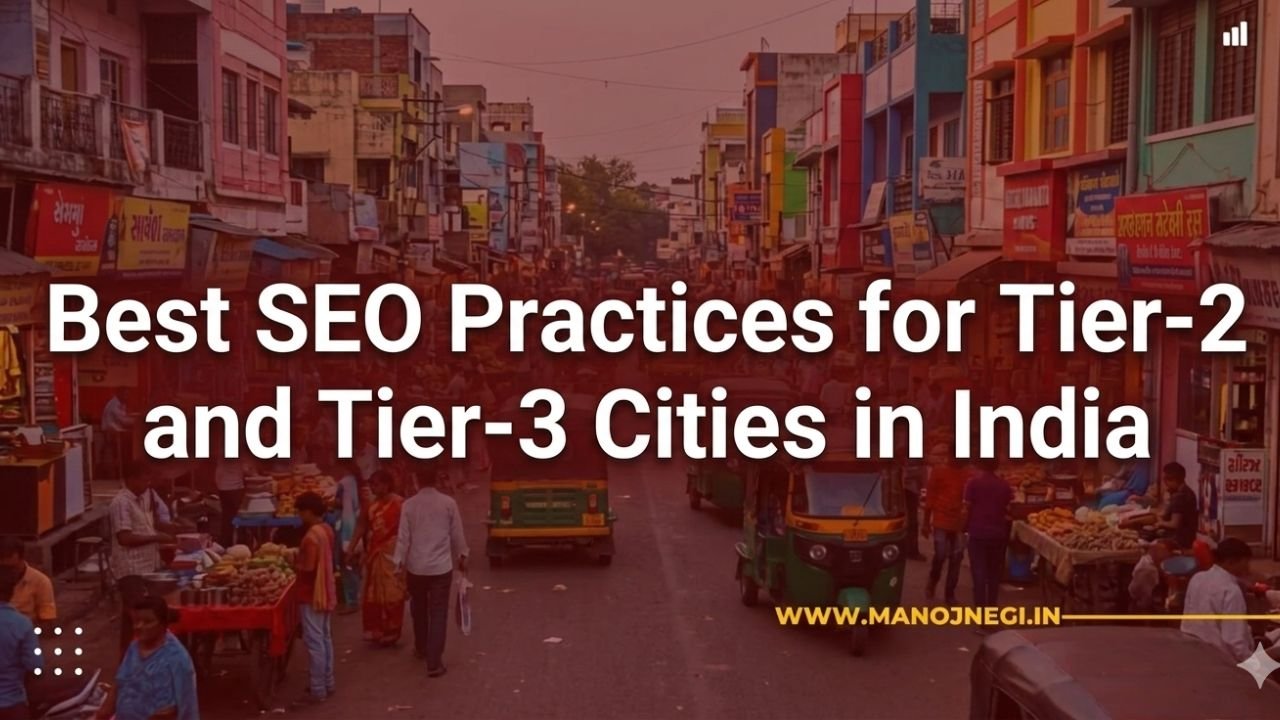
We must say that we are living in a digital era, and here, having a strong online presence is a must for businesses everywhere. However, businesses in cities like Delhi, Mumbai, and Bengaluru often dominate search rankings; tier-2 and tier-3 cities are also rapidly joining the party.
The affordability of smartphones and increasing internet penetration have resulted in significant online activities in smaller cities. Well, when it comes to search engine optimization (SEO), many businesses still find it difficult to do well on the internet.
In this post, we will discuss some practical SEO tips, especially for tier-2 and tier-3 cities, that’ll help boost online presence and ROI.
Practical SEO Tips for Tier-2 and Tier-3 Indian Cities
Understand the Local Landscape
It is often noticed that search queries in tier-2 and 3 cities are somewhat different from queries made by tier-1 people. People often search for “Bhiwadi Bakeries” or “Ajmer car service.” This indicates that search queries made here are local. Hence, based on this data, SEO experts must focus on targeting location-based keywords. Such keywords include city name, neighbourhood terms, and common local phrases. Here are some of the examples:
- “Best coffee shop in Jaipur”
- “Top yoga classes in Rajkot”
- “Affordable wall painting services in Lucknow”
To identify common search queries that people are searching for, you can take the help of tools like Google Search Console and Ubersuggest.
Optimize Google My Business (GMB) Profile
When it comes to targeting the local audience, optimizing the Google My Business profile is a must. It makes your business appear in Google Maps and local search results. While optimizing the GMB profile, there are certain things that we need to keep in mind:
- Add correct business name, address, and phone numbers (NAP)
- Do not forget to add your daily business hours and holidays
- Do add high-quality photos of your shop from the outside and inside
Having detailed information in the GMB profile is a must to build trust, improve credibility, and boost local online visibility & store footfall.
Hyper-localization is Important
If we specifically talk about smaller cities, hyperlocal content gives a competitive edge. Now, you might be wondering what this means. Let us make things clear.
If you are writing a blog post on “Best gifts for toddlers,” instead of that, try writing on “Best 5 shops in Dehardun to buy gifts for toddlers.” Such content gains more attention and can get a good search visibility. Your local topics should include:
- Local event roundups
- Customer stories from the community
- Guides related to local interests
Build Local Citations & Directories
Local citations & directories are not old school; they are still important for a strong local presence. Find out quality online directories, review sites, or local listings, and add your correct business details. Here, you must remember one thing: your business details should be consistent across all platforms. Even small mistakes can affect your SEO performance as Google may see it as something fishy.
Earn Genuine Local Reviews
Well, the internet has made people smarter, even in tier-2 and tier-3 cities. Before buying any product or service, they do check what customers have to say about them. This is why it is important to get genuine local reviews. It also helps in the SEO efforts.
So, how can you get reviews? Simply, encourage your customers to share feedback about the product or service they bought on your website, GMB profile, local review sites, or on social media platforms. You can also give small perks or discount coupons to your customers for adding a genuine review.
Above all, it is also important to respond promptly to both positive and negative reviews. Try to convert negative reviews into positive ones by solving the query of customer regarding that product.
Use Social Media for SEO Boost
Social media may not affect your rankings directly, but they help with brand recognition and traffic generation. To use social media effectively:
- Share blog posts, customer testimonials, and special offers on social media
- Tag your location and popular hashtags
- Collaborate with location influencers who have a loyal audience
Do Not Ignore Mobile Optimization
A large population in India, irrespective of the city, uses mobile phones for online shopping. Hence, it is important for you to ensure that your website is mobile-friendly and all pages, navigation, and CTAs are working fine.
Focus on Long-Tail Keywords
In smaller cities, search volume might be low, but search intent is often high. Users tend to search with specific phrases like:
- “Affordable AC repair in Mysore”
- “Best school uniforms supplier in Surat”
- “Home tuition in Cuttack for 8th class”
These are long-tail keywords, more specific queries with higher chances of conversion.
Tools like Google Autocomplete and “People also ask” sections are goldmines for these targeted phrases.
Create Local Backlinks
Backlinks are a strong ranking factor. In local SEO, focus on getting backlinks from:
- Local blogs
- Local news sites or city magazines
- Business partner websites
- Community portals
For instance, a travel agency in Varanasi can collaborate with a local tourist blog for a featured article. That builds authority and boosts SEO.
Be Patient, Be Consistent
SEO isn’t magic; it takes time.
In Tier-2 and Tier-3 cities, results may appear slower than in metro markets because of:
- Lower search volumes
- Less competition in certain niches
- Wider variations in search behavior
Consistency matters more than speed. Publish quality content regularly, update your listings, respond to customer reviews, and gradually you’ll build a steady stream of organic traffic.
Final Thoughts
SEO for Tier-2 and Tier-3 cities in India isn’t just about adapting metro strategies — it’s about understanding local user behavior, blending online tactics with offline realities, and building strong community connections.
The best SEO growth hacking techniques are those that resonate with real people — the students, professionals, homemakers, and small business owners who live, work, and search right where you are.
By focusing on local keywords, optimizing business profiles, creating community-centric content, and nurturing online reviews and listings, you’ll make your business more visible, credible, and relevant to your audience.
And that’s what meaningful SEO looks like: not just rankings, but real relationships with real customers.