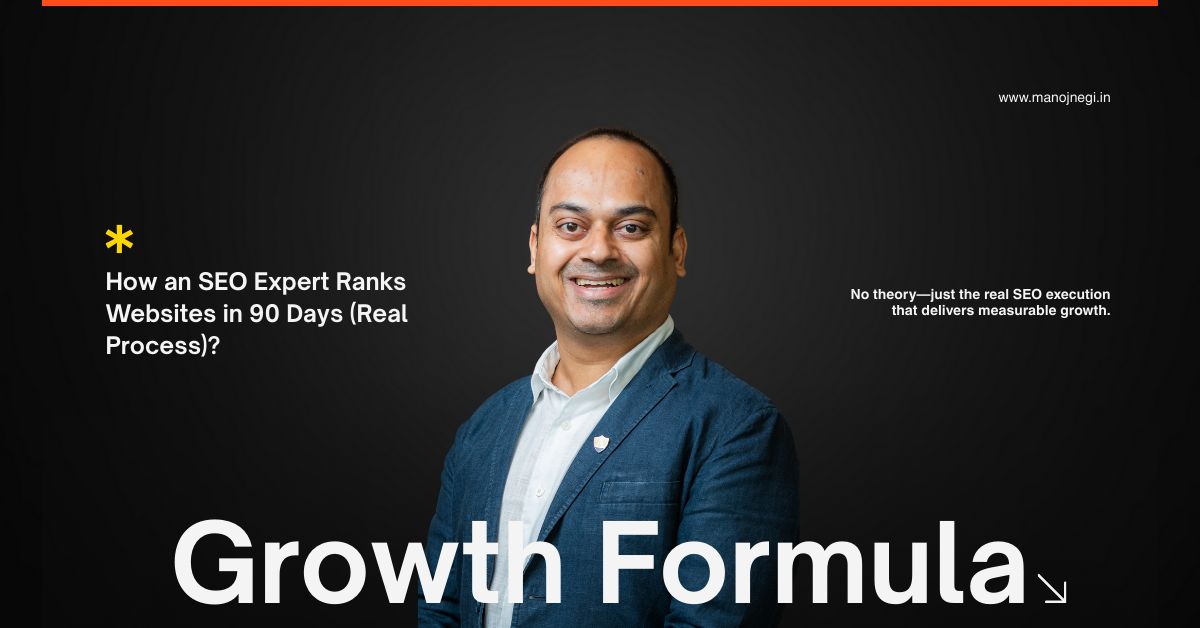
In this world inclined towards AI, ranking high in the SERPs is still important. Many experts claim to achieve first-page website rankings in 90 days, and they do so as well. Now, you might be thinking how they are able to do that.
Is it possible to rank a website in 90 days?
YES! A seasoned SEO expert can do it without a second thought, but this requires an incredibly well-crafted and flawless SEO strategy.
In this post, we will discuss the real process of how an SEO expert in Noida or anywhere across the globe ranks a website in approximately three months for certain keywords.
90-Day SEO Strategy to Rank a Website – Proven by SEO Experts
Here, we will break the 90-day period into three phases and examine how an SEO professional approaches each phase.
Phase 1 – Builds the Foundation (1-30 Days)
This phase will include conducting a thorough audit of your website to optimize the on-page. Let us break it down in easy steps:
1. Conducting the Full Audit of Your Website
The first and most important thing an expert does is identify the positives and negatives of the website. He looks for slow load times, broken links, and mobile issues using the Google Search Console and Page Speed Insights. Once done, the SEO expert will fix the core web vitals to ensure smooth rankings.
2. Submit Sitemap and optimize Robots.txt
The next step is to ensure the sitemap and robots.txt file are optimized well. If not, the SEO expert will do that.
3. Deep Keyword Research
Targeting long-tail keywords with buyer intent and focusing on low-competition keywords with high volume is the key.
4. Competitor Analysis
To rank higher, it is important to know what your competitors are doing. Identify the content weaknesses and backlink gaps to stay ahead of the competition.
5. Post Content
Create user-friendly long-form content following the E-E-A-T guidelines and post it periodically, at least 2 posts per week.
6. Optimize On-Page Elements
Make sure on-page SEO is under check, including meta titles and descriptions, H1-H2 headings, and focus keywords throughout the website.
Phase 2 – Accelerate Growth (31-60 Days)
Once the technical and SEO aspects of the website are up to date, it’s time to focus on growth strategies. Let us see how an SEO expert approaches that:
1. Refine Existing Pages
Now, the next step is to identify webpages with thin content and optimize for better information and clarity. Next, add internal links to relevant keywords and add alt texts to the images after compressing them for faster page loading.
2. Prioritize Mobile and User Experience
Make sure visitors on all devices, whether mobile or desktop, are able to easily navigate through your website and easily get what they want.
3. Start Strategic Link Building
Secure 20-30 high-quality backlinks through guest posts, broken link outreach, and resource pages. However, it is advised to avoid spammy directories as they may hamper your rankings.
4. Monitor Links
To get website rankings, you not only need to get backlinks but also monitor them closely. Use trusted tools like Ahrefs to check links and remove the poor ones. Remember, one strong link can positively impact your website rankings, and one toxic link can do the same negatively.
5. Pilar Pages
To establish your authority, create pillar pages linked to a specific topic, providing everything a user is looking for.
6. Track Metrics Early
Use Google Analytics to check your SEO performance by day 45, especially for long-tail keywords. This will give you a better idea of how your strategy is working.
Phase 3 – Scale and Optimize (61-90 Days)
Now, this phase includes speeding things up and optimizing according to the performance in the first 60 days. Here’s what the last phase includes:
1. Increase Content Velocity
It’s time to add fresh content to the top-performing pages to ensure they maintain rankings. Plus, it is also important to create a content calendar for the next 2 months.
2. Improve Internal Linking
Internal link to more relevant pages by adding more content. This will also improve the dwell time of users, building your authority.
3. Boost Off-Page Efforts
Post infographics, promote natural shares of your content, and partner for webinars to improve brand recognition.
4. Track Rankings Weekly
Monitor keyword rankings weekly and focus on top-performing keywords.
5. Run Performance Audit
To ensure everything is under control, do a performance audit of your off-page and on-page efforts, solving issues if any arise. Check for winners, cut losers, and watch for featured snippets.
Common Pitfalls to Avoid
Keyword stuffing tanks you—use them naturally, layering semantic terms for context. Ignoring intent mismatches content with searchers, spiking bounce rates. Always reverse-engineer top results.
Overlooking technical SEO delays everything; unoptimized sites wait 6-12 months for traction. Chasing quantity over quality links invites penalties—relevance rules. Skipping analytics means flying blind; weekly checks catch issues fast.
Essential Tools for Your 90-Day Sprint
- Ahrefs or SEMrush: Dig up keywords and stalk competitors.
- Google Search Console & Analytics: Track everything for free.
- Screaming Frog: Uncover technical glitches.
- Google Sheets: Plan your content roadmap.
Start with free versions; premium tools run approximately $100-300/month but pay off quickly.
Why This 90-Day Plan Delivers Every Time?
Google’s algorithms favor focused, consistent action over half-hearted tries, with a natural 90-day indexing rhythm. New sites build trust signals rapidly through quality content and links, snowballing traffic. I’ve used this to rank fresh sites in tough fields like medical devices, hitting thousands of visitors fast.
Tailor it to your niche—healthcare needs heavy E-E-A-T, while e-commerce focuses on conversions. Monitor closely, adapt on the fly, and stay the course. These 90 days ignite your rankings; smart maintenance keeps them climbing.